 Metadata Catalogue
Nepal
Type of resources
Available actions
Topics
Keywords
Contact for the resource
Provided by
Years
Formats
Representation types
Update frequencies
status
Scale
Resolution
-

Landslide data of Koshi basin is digitized from topo sheets published in 1990s.
-
The feature layer has been extracted from the 1x1 km grid data of the population distribution of Nepal. The data has been generated using the population census 2011 of Nepal and the landuse 2010 data from ICIMOD. Various other data source such as SRTM DEM 90 meter, Settlement data and protected area has also been used on the model.
-
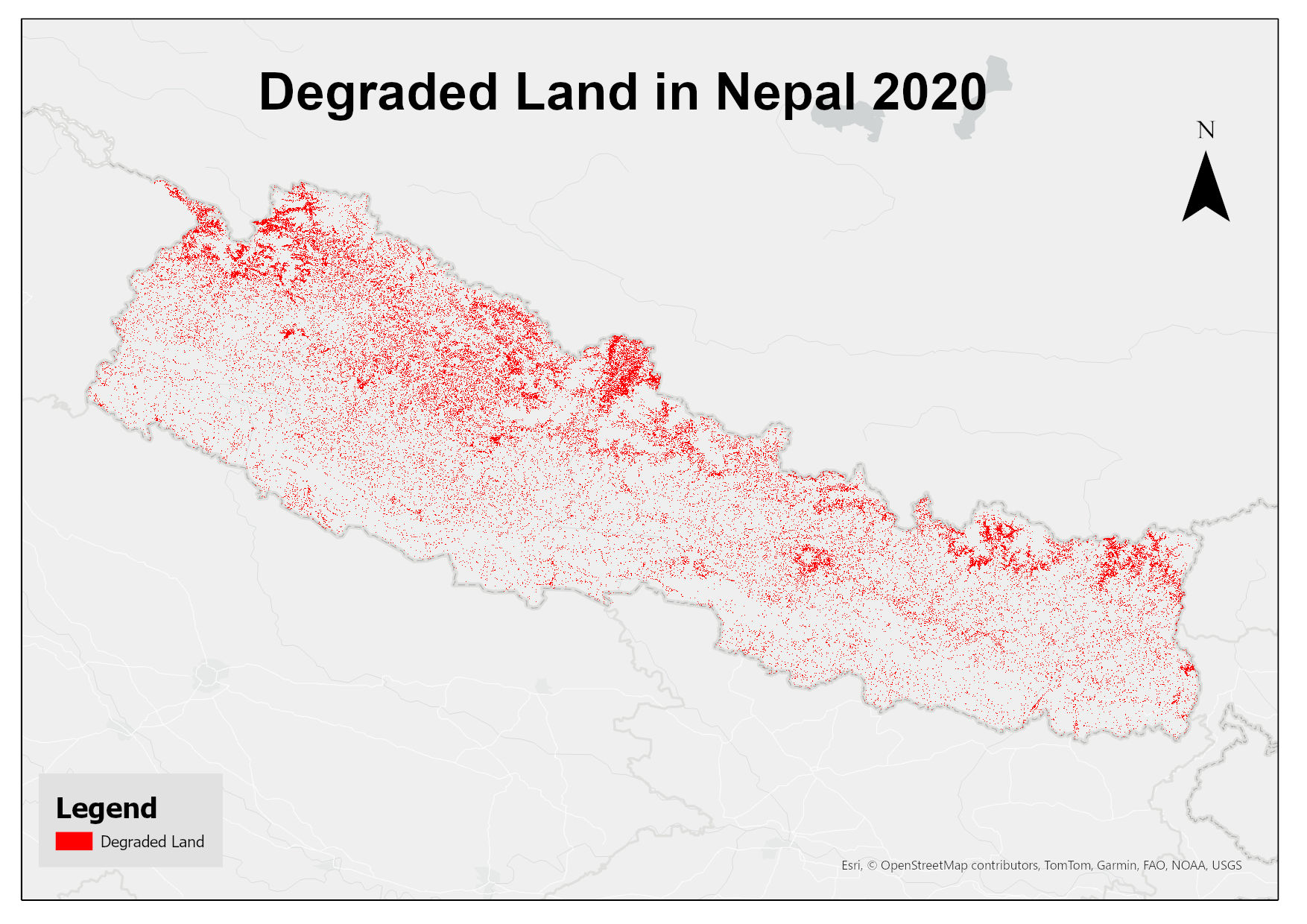
This dataset assesses land degradation in Nepal in 2020 based on SDG Indicator 15.3.1 by analyzing changes in land cover, land productivity, and soil organic carbon stocks. The 1OAO principle is applied in the computation method where changes in the sub-indicators are classified as improving, declining and stable. A land unit is considered degraded if any sub-indicator shows a negative or remains stable when previously degraded.
-
Eddy Covariance Station measuring turbulent fluxes on Lirung Glacier over approximately 16 days in October 2016.
-
Digital polygon data of ecological/vegetation zones of Nepal. This dataset is acquired from ESRI Map & Data Center in 2001.
-
Eddy Covariance Station measuring turbulent fluxes on Yala Glacier to study sublimation of snow and ice. The setup was installed at the main AWS on Yala Glacier.
-

Landslide data of Koshi basin was digitized from toposheet maps published in 1960s.
-
Digital polygon data of Land Capability of Western Nepal. The dataset includes details of land forms, slopes, soil type, drainage conditions etc. This dataset is created using Land use Map, published by Land Resource Mapping Project (LRMP), Dept. of Survey Kathmandu, Nepal in 1984.
-
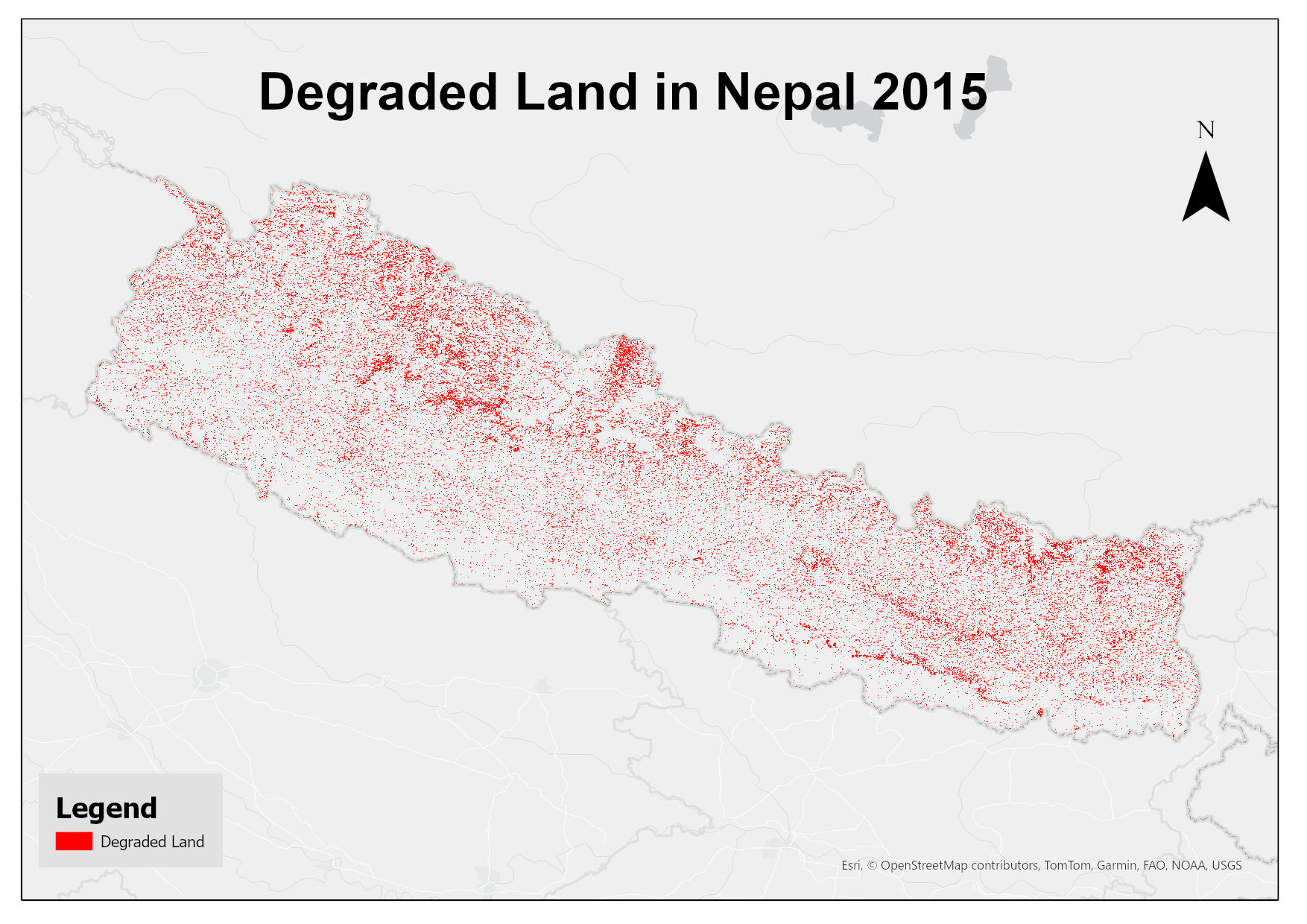
This dataset assesses land degradation in Nepal in 2015 based on SDG Indicator 15.3.1 by analyzing changes in land cover, land productivity, and soil organic carbon stocks. The 1OAO principle is applied in the computation method where changes in the sub-indicators are classified as improving, declining and stable. A land unit is considered degraded if any sub-indicator shows a negative or remains stable when previously degraded.
-
Digital polygon data of Geology of Nepal. This dataset is created using geological Map of 1,000,000 scale published by Department of Mines and Geology in 1994.