 Metadata Catalogue
China
Type of resources
Available actions
Topics
Keywords
Contact for the resource
Provided by
Years
Representation types
Update frequencies
status
Scale
Resolution
-
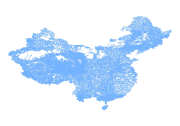
Digital line dataset of River system of China. This dataset is basic vector layer acquired from USGS.
-
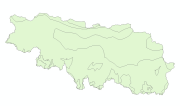
Digital polygon dataset of Eecoregions of Qomolangma Natural Preserve (QNP), Tibet, China.
-
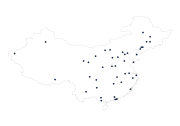
Digital point dataset of Location of Major Cities of China. This dataset is basic vector layer acquired from USGS.
-

Digital point data of pass locations of Kailash Sacred Landscape in Nepal.
-

Digital polygon data of wetland of Kailash Sacred Landscape.
-
This checklist contains a total of 8 mammal species documented from the China part of Kailash Sacred Landscape. This information has been collated from feasibility assessment report of the Kailash Sacred Landscape Conservation and Development Initiative and from IUCN websites.
-
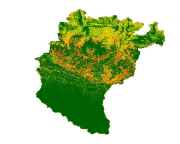
High levels of water-induced erosion in the transboundary Himalayan river basins are contributing to substantial changes in basin hydrology and inundation. Basin-wide information on erosion dynamics is needed for conservation planning, but field-based studies are limited. This study used remote sensing (RS) data and a geographic information system (GIS) to estimate the spatial distribution of soil erosion across the entire Koshi basin. The revised universal soil loss equation (RUSLE) was used in an ArcGIS environment with rainfall erosivity, soil erodibility, slope length and steepness, cover-management, and support practice factors as primary parameters. The estimated annual erosion from the basin was around 42 million tonnes.
-
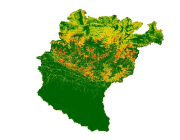
High levels of water-induced erosion in the transboundary Himalayan river basins are contributing to substantial changes in basin hydrology and inundation. Basin-wide information on erosion dynamics is needed for conservation planning, but field-based studies are limited. This study used remote sensing (RS) data and a geographic information system (GIS) to estimate the spatial distribution of soil erosion across the entire Koshi basin. The revised universal soil loss equation (RUSLE) was used in an ArcGIS environment with rainfall erosivity, soil erodibility, slope length and steepness, cover-management, and support practice factors as primary parameters. The estimated annual erosion from the basin was around 42 million tonnes.
-
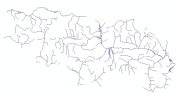
Digital polygon dataset of Hydrography of Qomolangma Natural Preserve (QNP), Tibet, China.
-
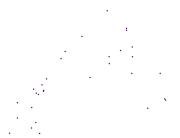
Digital point data of touristic place of Kailash Sacred Landscape.