 Metadata Catalogue
50000
Type of resources
Available actions
Topics
Keywords
Contact for the resource
Provided by
Years
Representation types
Update frequencies
status
Scale
Resolution
-

Landslide data of Koshi basin is digitized from topo sheets published in 1990s.
-

Digital polygon dataset of Hotels and Lodges of Sagarmatha National Park, Nepal. This dataset is created using Topographic sheet data at scale of 25,000/50,000, of 1995 acquired from National Geographic Information Infrastructure Project (NGIIP), Dept. of Survey, Nepal and Tourist maps published by various map publishing companies.
-
Digital polygon data of Glaciers of Bhutan in 1990. This dataset is created using Landsat MSS, imageries of 1990. The glacier outlines was derived semi-automatically using object-based image classification (OBIC ) method separately for clean ice and debris cover and further editing and validation was done carefully by draping over the high resolution images from Google Earth.
-
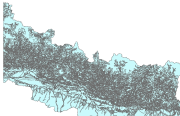
Topographical thematic Vector digital data of Nepal based on Land Reource Mapping Project (LRMP), Dept. of Survey, 1984
-
The layer shows the roads in class 1 class 2 and class 3 all over the country
-

Digital point data of Mountain Peaks Location of Sagarmatha National Park, Nepal. This dataset is created using Topographic sheet data at scale of 25,000/50,000, of 1995 acquired from National Geographic Information Infrastructure Project (NGIIP), Dept. of Survey, Nepal.
-
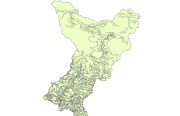
Land System vector digital data build based on Land System Map (1:50,000), Land Reource Mapping Project (LRMP), Dept. of Survey, 1986.
-
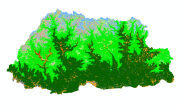
Land Cover data of Bhutan for 2000. This dataset is created using the LandSat 30 meter spatial resolution satellite image of 2000.
-

Digital line data of River Network of Sagarmatha National Park, Nepal. This dataset is created using Topographic sheet data at scale of 25,000/50,000, of 1995 acquired from National Geographic Information Infrastructure Project (NGIIP), Dept. of Survey, Nepal.
-
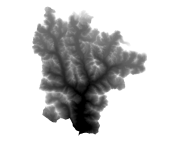
Digital Elevation Model, DEM of Sagarmatha National Park, Nepal. This dataset is DEM is created by interpolating contour and spot height using Topographic sheet data at scale of 25,000/50,000, of 1995 acquired from National Geographic Information Infrastructure Project (NGIIP), Dept. of Survey, Nepal.